METASTRA at the 10th World Congress of Biomechanics
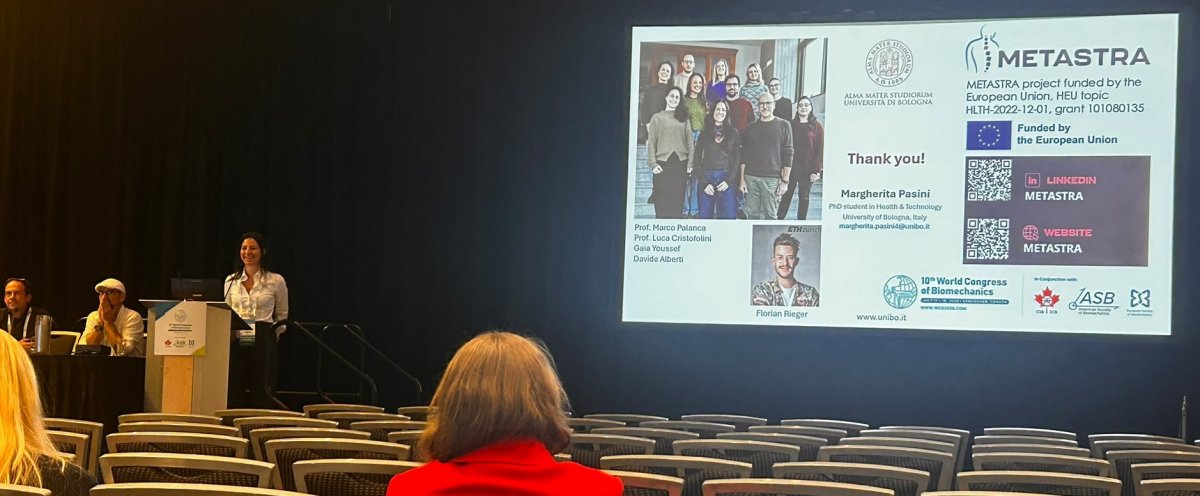
The METASTRA consortium was represented at the 10th World Congress of Biomechanics (WCB 2026), held in Vancouver, Canada, from 11 to 15 July 2026.
Partners presented a series of contributions covering the project's experimental and computational work on vertebral metastases. These addressed the influence of lytic lesion size and location on the compressive failure load of metastatic vertebrae, the effect of posterior element removal on the mechanical behaviour of thoracic and lumbar spine segments, the role of intervertebral disc degeneration in altering strain patterns and failure location in adjacent vertebrae, and the integration of validated data driven and mechanistic models for the prediction of vertebral fracture risk.
The programme included:
- Oral presentation OA194-04 — Roberts et al., "Lytic Lesion Size and Location Affect the Compressive Failure Load of Human Metastatic Vertebrae Calculated With Subject Specific Finite Element Models"
- Poster P2-154 — Margherita Pasini et al., "Effect of Posterior Elements Removal on the Mechanical Behaviour of Thoracic and Lumbar Human Spine Segments Tested in Compression"
- Poster P3-286 — Damien Lacroix et al., "qCT-Based Nonlinear Finite Element Modelling Reveals Hidden Mechanical Vulnerability Patterns in Vertebrae with Metastatic Lesions"
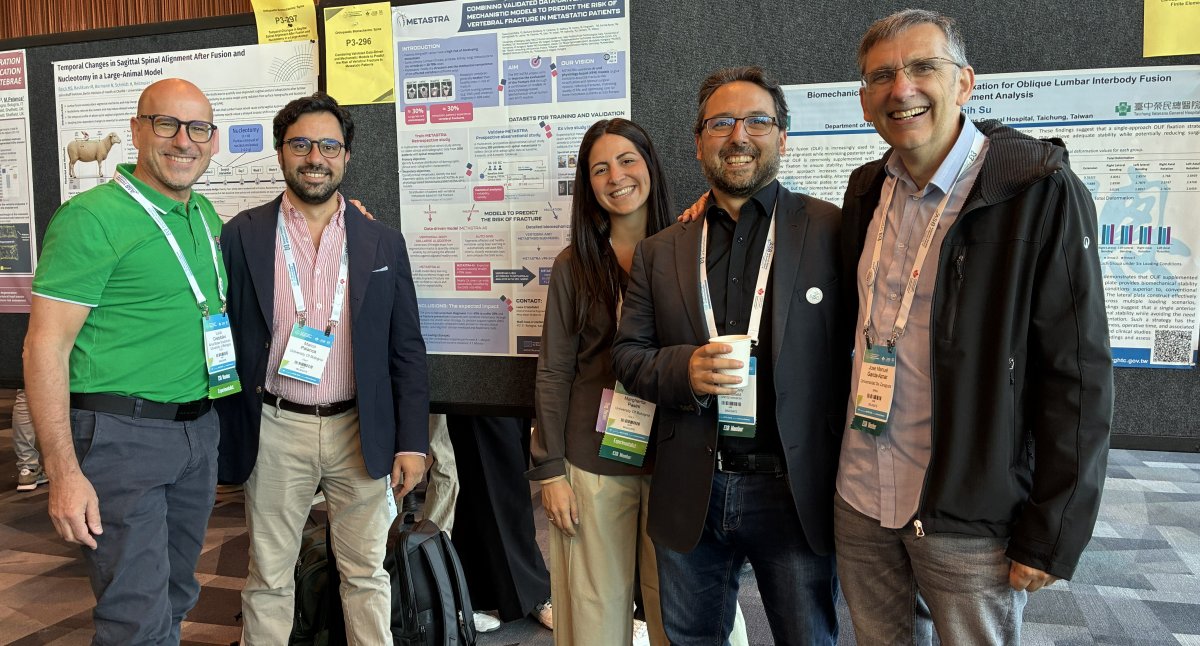
- Poster P3-296 — Luca Cristofolini et al., "Combining Validated Data-Driven and Mechanistic Models to Predict the Risk of Vertebral Fracture in Metastatic Patients"
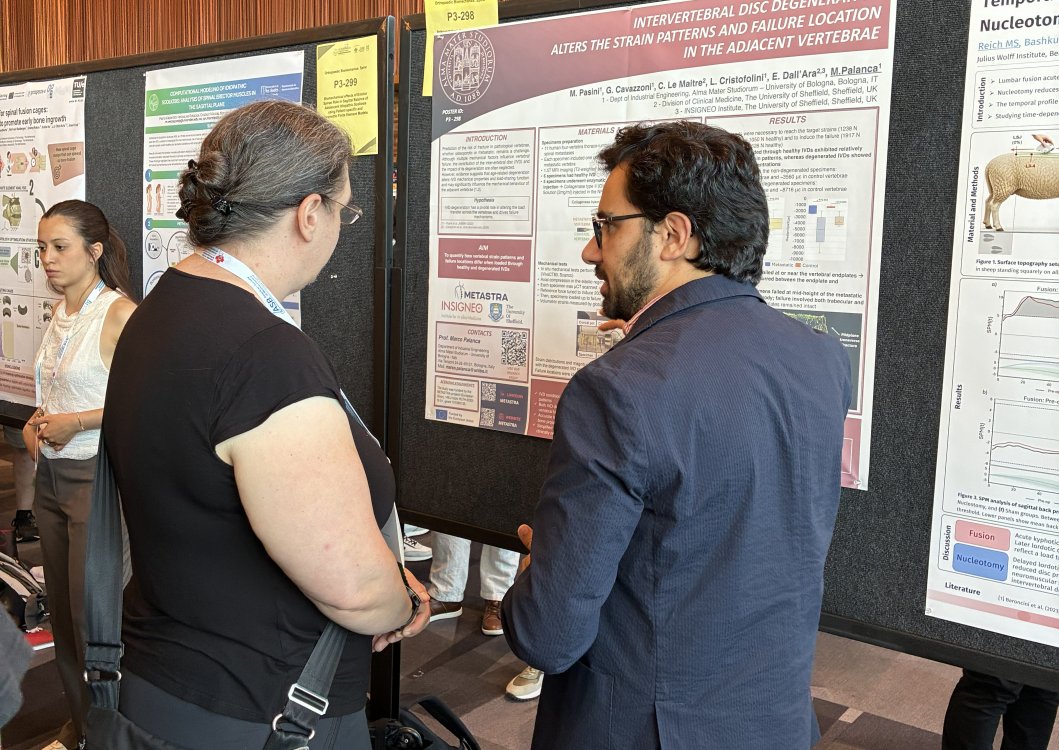
- Poster P3-298 — Palanca et al., "Intervertebral disc degeneration alters the strain patterns and failure location in the adjacent vertebrae"
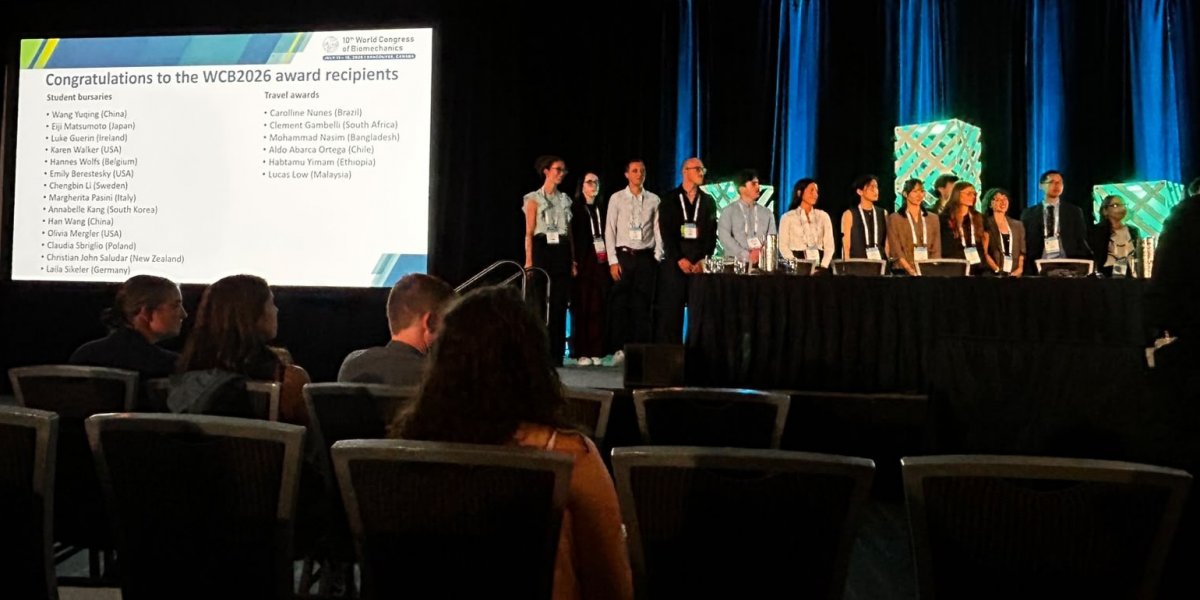
The consortium is also pleased to report that Margherita Pasini (University of Bologna) was awarded a Student bursary at the congress and presented her work on the mechanical characterisation of intervertebral discs.
WCB 2026 provided a valuable forum for disseminating the project's latest results and for discussion with the wider biomechanics community, in support of METASTRA's objective of enabling personalised, evidence based treatment decisions for patients with spinal metastases.